
Commercial Chiller Repair and Service in Southeastern Wisconsin
Chiller Repair, Maintenance and Replacement for Commercial and Industrial Plants
We repair, maintain and replace water-cooled and air-cooled chillers, from high-tonnage centrifugal and screw machines down to smaller scroll and reciprocating units, and because chillers are the core of what this company does rather than a line item beside furnaces, we take on the machines most contractors decline to open. Call ((414) 899-4641
and you reach a technician who can start working the fault from the make, model and alarm code.
Chiller Down? Here Is What the First Call Gets You
An emergency chiller call to (414) 899-4641 reaches an on-call technician rather than an answering service, day, night, weekend or holiday. Have the make, model and any active alarm or fault code ready and the diagnosis starts on the phone while the truck is loaded.
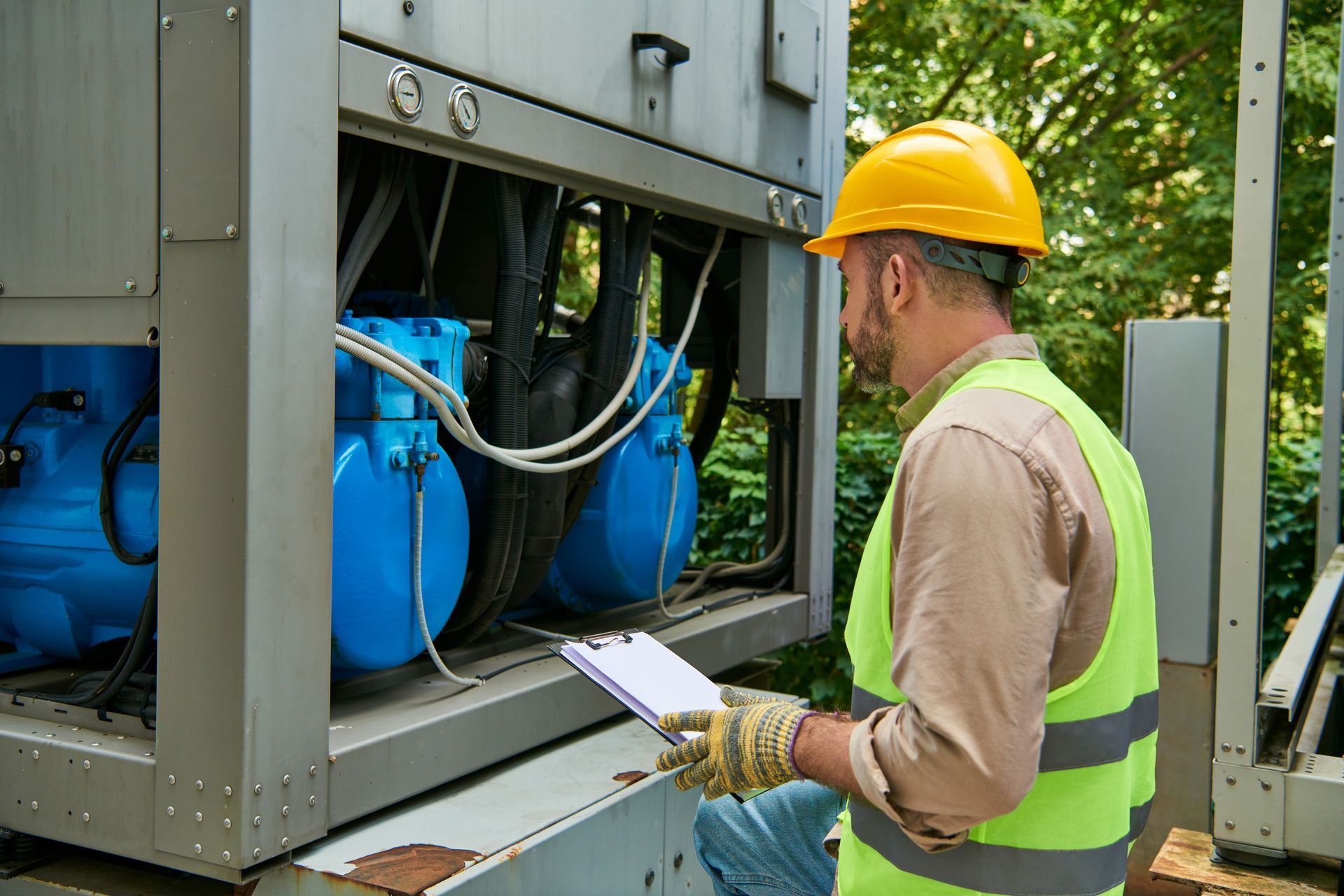
Fault worked on the phone
We ask what the machine is doing, what the panel is reporting and what changed, and we tell you what to check or leave alone before anyone arrives.
Diagnosis on site, by measurement
On arrival the technician logs refrigerant and oil pressures, approach temperatures on the evaporator and condenser, compressor amp draw and oil pressure, starter or VFD status, and condenser water flow and temperature, then reads that against the machine's design conditions rather than against a guess.
Scope, timing and cost before work starts
You get the fault, the repair it takes, what parts are on the truck versus what has to be ordered, and what the work costs, stated before we start it. Parts availability is reported honestly rather than promised.
Cooling kept in the building
We carry a deep inventory of common chiller parts, and where a repair or a replacement will run long we coordinate a temporary chiller rental so a major job does not become a shutdown.
Emergency response covers all of our commercial HVAC emergency service, not chillers alone, so a tower, pump or controls fault that took the chiller offline is handled on the same call.
Chiller Repair Is the Core Competence, Not a Sideline
Our founder, Jim Jensen, spent more than twenty years in Carrier and York factory service before starting this company in 2008. Our technicians hold advanced certifications and direct factory training, including Bitzer, and building managers, plant operators and mechanical contractors across Waukesha, Milwaukee and southeastern Wisconsin bring us their most critical cooling equipment. Mechanical contractors subcontract chiller work to this team, which is the plainest measure of the depth on it.
The equipment we work on, by design and by class:
Water-cooled and air-cooled machines, packaged and field-erected.
Centrifugal chillers, including high-tonnage machines carrying whole campuses and production loads.
Scroll and reciprocating chillers on smaller commercial and process loads.
Compressor work at the level of overhauls, rebuilds and reciprocating-to-screw conversions rather than component swaps only.
Cooling towers, condenser water systems and pumps, since a chiller complaint is often a condenser water problem.
Family owned, based in Waukesha, insured and bonded, with a deep inventory of common parts on the shelf and scope, timing and cost stated before a truck rolls.
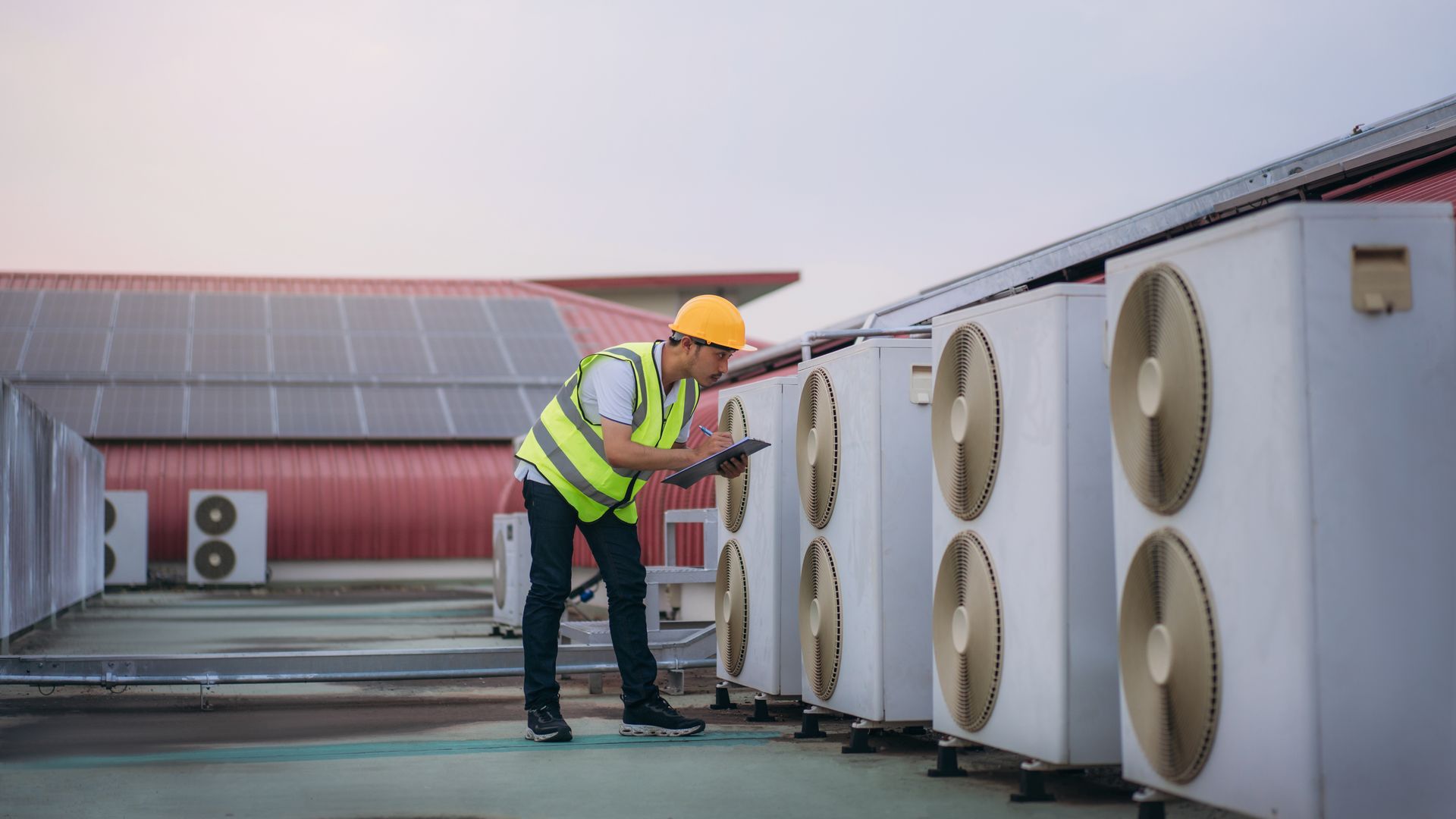
Industrial Chiller Repair Starts with Reading the Symptom Correctly
A chiller rarely fails without warning. It drifts, and the drift shows up in the log sheet before it shows up as a warm building. These are the conditions we are called on most often and what usually sits behind them.
Loss of capacity with the machine still running, most often fouled condenser tubes, low refrigerant charge, non-condensables in the circuit or a compressor no longer making full lift.
High approach temperatures on the condenser or evaporator, which point to tube fouling, scale, low water flow or a failing tower before they point to the compressor.
Chiller not cooling at all, which comes down to a safety lockout, a low-pressure or freeze-stat trip, a failed starter or VFD, loss of condenser water flow, or a control sequence holding the machine off.
Surge on a centrifugal, usually a lift problem from condenser water temperature, fouled tubes or a vane control fault, and damaging if it is left running through it.
Unloading and staging problems on a screw machine, typically a slide valve, solenoid or oil circuit issue.
Low oil pressure, oil loss or high oil temperature, which is where a bearing or compressor problem announces itself while it is still repairable.
Short cycling and repeated safety trips, which are the machine reporting a real fault that resetting will not clear.
We measure before we quote. If the fault is in the tower, the pump, the condenser water or the controls rather than in the chiller, we say so and fix that instead.
Preventative Maintenance
Routine inspections, chiller tube cleaning, refrigerant and oil analysis, performance testing, and comprehensive reporting. Proactive care to catch issues before they become emergencies.
Chiller Service, Maintenance and Replacement, All In-House
Chiller Diagnostics and Repair
Troubleshooting and repair for cooling failures, temperature drift, safety trips and abnormal noise. Refrigerant and oil pressures, approach temperatures, amp draw, superheat and subcool, starter and VFD condition and controls and safeties are all checked and recorded on arrival, and the finding is reported with the repair it takes and what it costs.
Commercial Chiller Maintenance
Scheduled visits built around the machine and the load it carries: condenser tube cleaning, refrigerant and oil analysis, log review against design conditions, performance testing, purge run-time review on low-pressure machines, vibration and amp draw on the compressor, and starter and VFD inspection. Every visit produces a written report of work performed, equipment condition and recommended repairs, which is the record a replacement request has to stand on later. Chillers are usually the highest-consequence asset on a preventative maintenance program.
Compressor Overhauls and Retrofits
Full centrifugal rebuilds, screw compressor overhauls, and upgrades that swap aging reciprocating compressors for higher-efficiency screw machines. We tell you when the shell and tube bundle are sound enough to justify the overhaul and when they are not.
Chiller Replacement and Installation
When a repair is no longer the right spend, we size the replacement against the building's actual measured load rather than the nameplate on the old machine, then sequence the changeover, rigging and tie-in to hold downtime inside a window you choose. Temporary cooling is coordinated where the plant cannot go dark.
Cooling Tower and Condenser Water Service
Basin and fill cleaning, drift eliminators, gearbox oil, float and make-up, water treatment coordination and freeze protection before winter, plus condenser water pumps and flow verification. Tower condition drives chiller efficiency, so the two are serviced together.
Repair It Again or Budget for a Replacement?
This is the decision most facility managers are actually making when they call, and it is made from the equipment's condition and run history rather than from its age alone. A twenty-year-old machine with a sound shell, a clean tube bundle and available parts is often worth repairing. A twelve-year-old machine that has failed three summers running usually is not.
What points toward an overhaul or a repair:
The shell and tube bundle are sound and the tubes are cleanable rather than pitted or leaking.
The failure is one identifiable component, most often a compressor, starter or control, with a clear root cause.
Parts are still supported and available for the machine.
Measured performance against design conditions is close once the fault is corrected.
What points toward replacement:
Repeat failures across seasons, particularly on more than one system in the machine.
Refrigerant phase-out exposure, where the charge is getting harder and more expensive to source.
Efficiency losses that show up in the utility bills rather than only in the log sheet.
Tube bundle or shell condition that cannot be recovered by cleaning or retubing.
We put the condition findings, the run history and both numbers in front of you before you take either one to a director or a board, and we will tell you when a repair is not worth making. Where a major repair or a changeover will run long, a temporary chiller rental bridges it.

The Facilities and Chiller Brands We Work On
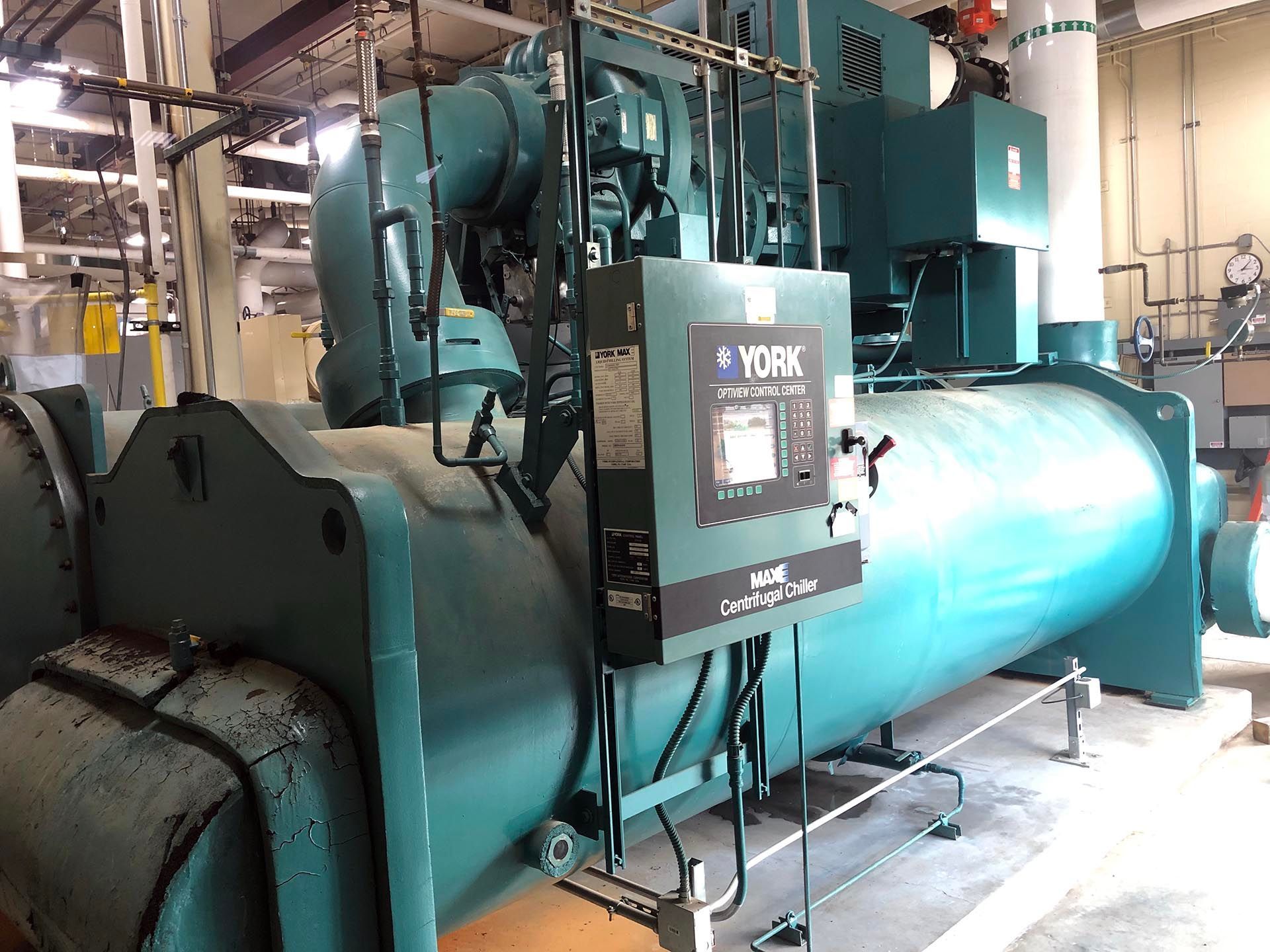
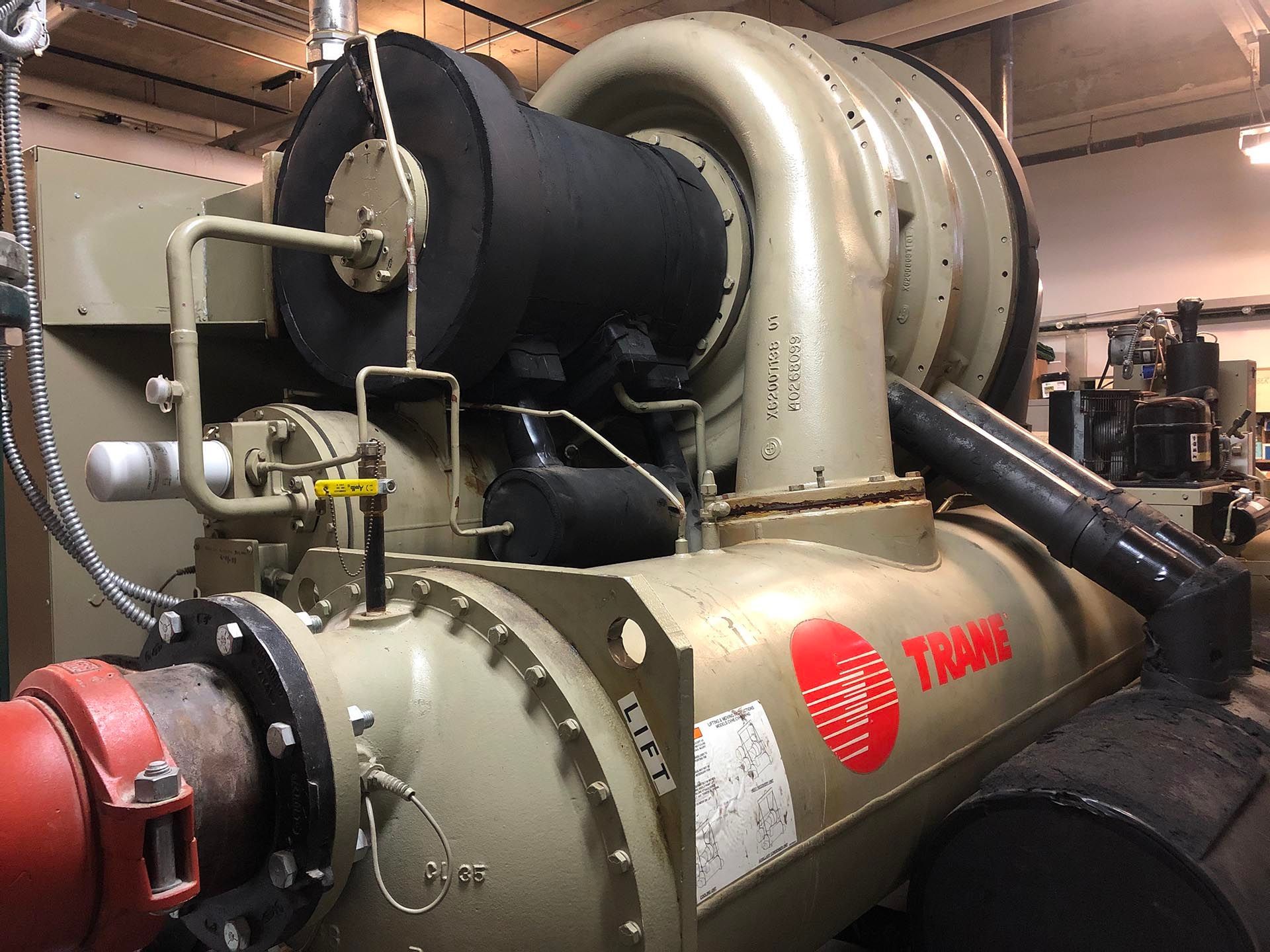
Our work sits in school districts, hospitals, universities, manufacturing plants, office buildings and multi-facility commercial portfolios, and mechanical contractors bring us in as their chiller subcontractor. We routinely service all major chiller makes and models, including Trane, Carrier, York, Daikin, McQuay, Quantech, JCI and Bitzer.
Whether it is a
York chiller repair in Waukesha, a
Trane overhaul near Milwaukee or a screw machine in a plant at the western edge of our southeastern Wisconsin coverage, we bring the parts, the factory training and the network to get the machine running.
One Team for the Chiller and the Rest of the Plant
The chiller is rarely the only machine in the room. The same technicians who service your chiller also service the rooftop and packaged units, the steam and hot water boilers, the cooling towers, the pumps and the building automation controls that operate all of it, so a fault that starts in a sequence and ends inside a compressor stays with one contractor from the first call to the fix.
That means no separate integrator to get on the phone, no second contractor to schedule, and one company accountable for the plant. Scope, timing and cost are stated before a truck rolls, on a repair and on a replacement alike.
Chiller Questions We Answer Most
How long should a commercial chiller last?
A well-maintained water-cooled chiller commonly runs twenty to thirty years, and an air-cooled machine typically fifteen to twenty-five, though maintenance history matters more than the calendar. Water treatment, tube cleaning intervals, run hours, load profile and whether faults were diagnosed or reset all move the number. A documented service history is what tells you where a specific machine sits in that range.
What does it cost to repair a commercial chiller?
It depends on the fault, the tonnage and the compressor type, so a page cannot honestly quote it. A refrigerant leak repair, a starter contactor or a control board is a different order of cost from a centrifugal compressor rebuild or a retube. What we commit to is stating the scope, the timing and the cost after the diagnosis and before the work begins, including what a part on order adds.
What commonly fails on a chiller?
The most frequent findings are fouled condenser tubes, low or leaking refrigerant charge, compressor and bearing problems showing up first as oil pressure or oil temperature faults, failed starters and VFDs, bad sensors and safety controls, and condenser water problems in the tower or pumps rather than in the chiller at all. Repeated safety trips are almost always a real fault rather than a nuisance alarm.
Who repairs commercial chillers in Waukesha and Milwaukee?
Advanced Chiller Services works on commercial and industrial chillers across ten southeastern Wisconsin counties from an office in Waukesha, covering Waukesha and Milwaukee counties out to Dane, Rock, Columbia and Dodge. Call (414) 899-4641 for an emergency or to schedule a site visit, and the call reaches a technician rather than an answering service.
What is your process for evaluating and upgrading older HVAC systems in existing facilities?
Upgrading an existing HVAC system starts with a detailed site assessment and a collaborative conversation with the facility manager or building owner. We analyze the performance, age, and service history of all major equipment—chillers, boilers, air handlers, controls, and distribution networks. Our diagnostics cover everything from airflow mapping and thermal imaging to energy use benchmarking, so we can pinpoint inefficiencies, recurring issues, and potential risks of future failure.
Our upgrade recommendations are always tailored to your business goals—whether that’s reducing energy costs, improving comfort, increasing reliability, or meeting new code requirements. We propose solutions that fit your budget and operational schedule, from phased component replacements to full system retrofits or controls integration. We’ll also assist with rebate or grant paperwork (such as Focus on Energy in Wisconsin) and guide you through every step of the upgrade process, minimizing disruption and maximizing long-term value for your facility.
Call (414) 899-4641 and Get a Technician on the Line
One call gets a technician who can work the fault from your make, model and alarm code, and a site visit on the calendar. Ask for an emergency response, a chiller health check, a maintenance schedule or a repair-versus-replacement assessment. Our office is open Monday through Friday, 8am to 5pm, and emergency chiller calls are answered outside those hours.