Commercial HVAC Emergency Service
When a chiller trips offline before a school day or a boiler drops the process heat in a plant, (414) 899-4641 reaches a technician who services both the mechanical equipment and the building automation that runs it, so nobody spends the night arguing over whose equipment failed.
Commercial and industrial buildings only, across ten southeastern Wisconsin counties, answered nights, weekends and holidays.
Emergency Commercial HVAC and Chiller Response for Wisconsin Facilities
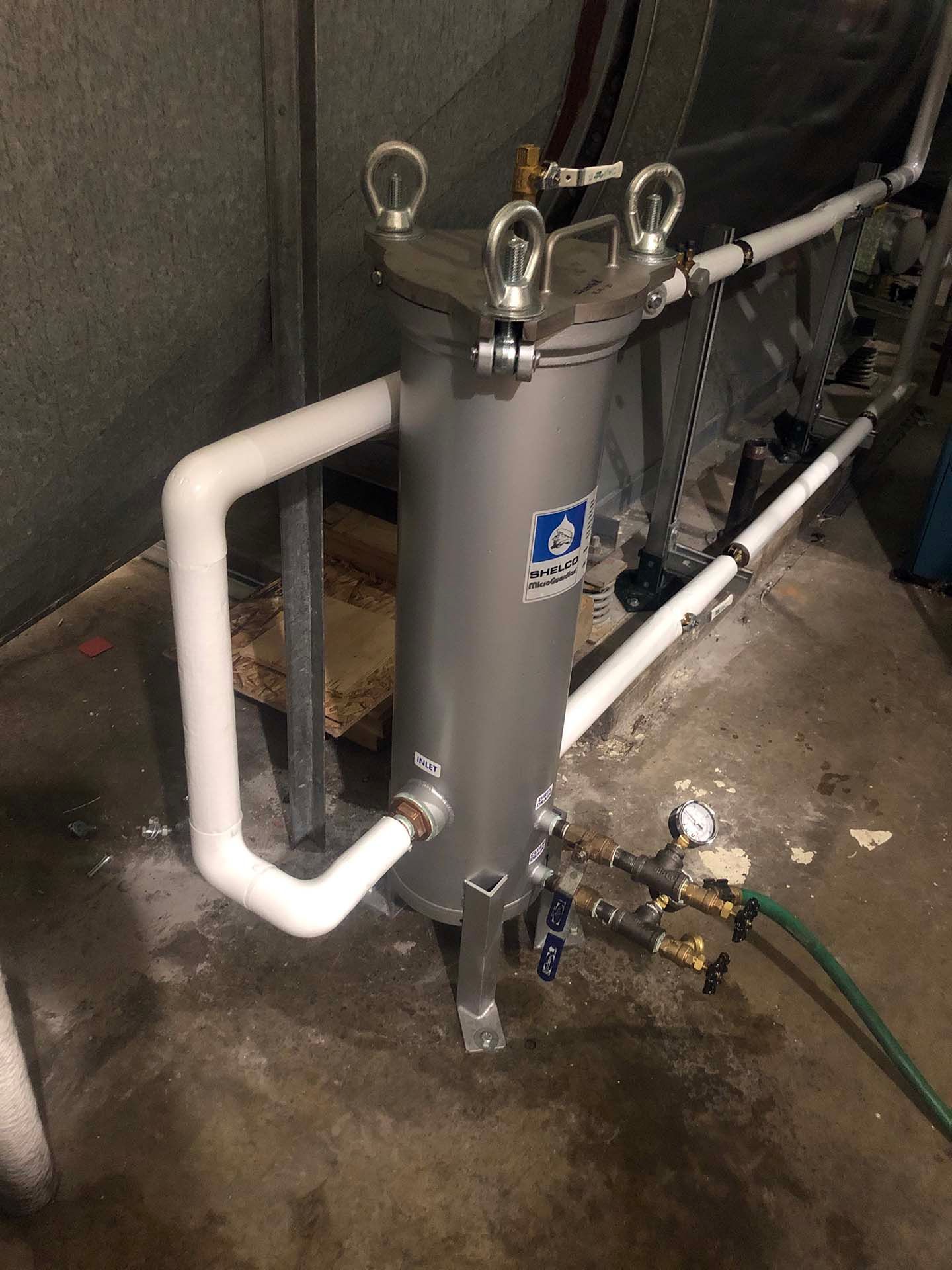
We service the equipment that takes a commercial building down when it fails: water-cooled and air-cooled chillers, cooling towers and pumps, rooftop and packaged units, steam and hot water boilers, make-up air units, and the controls and BAS platforms that sequence all of it. The buildings that call are school districts, office campuses and leased towers, manufacturing and industrial plants, and data and server rooms.
An emergency here is not a house losing air conditioning. It is a 400-ton centrifugal locking out at 11pm, a rooftop unit offline over a leased floor on a Monday morning, or a controls fault that has shut down cooling across a campus.
Answered Around the Clock, Not Routed to an Answering Service
Emergency calls to (414) 899-4641 are answered around the clock, nights, weekends and holidays, and the call reaches a technician rather than a dispatcher reading from a script. That technician can start working the fault over the phone from the make, model and alarm code while the truck is being loaded. Texting the same number works too, which is easier when you are standing next to running equipment.
Our office hours are Monday through Friday, 8am to 5pm. That window is for quotes, scheduled work and site visits. Emergency response is separate and does not stop at 5pm.
Schedules verified against actual occupancy, sensors calibrated against measured conditions, overridden points found and released, and trend logs reviewed so a drifting machine is caught in data before it is caught by an occupant.
What Happens Between Your Call and a Running Machine
You reach a technician, not a queue
The number connects you to someone who can begin diagnosing before anyone leaves the shop. Have the equipment make and model and the fault or alarm code ready if you can get to the panel safely, and the phone call starts doing real work.
Trucks stocked for commercial and chiller repairs
Service vehicles carry the parts and instruments common to commercial HVAC and chiller work, so most emergency calls are resolved on the first visit rather than billed across three. The technicians dispatched hold master certifications and factory training from major equipment manufacturers.
An arrival time up front, then updates
You get an estimated arrival time when you call, not after the truck is already late. If the repair needs a part or specialty equipment, we tell you what it requires and what the options are, including the honest answer when a part is not sitting on a shelf in the Midwest.
AC outages impacting employee or customer comfort
Boiler breakdowns or loss of hot water for critical processes
Alarming noises, smoke, or potential safety hazards from HVAC units
When the Fault Crosses Systems, It Stays With Us
Most after-hours standoffs are not about the repair. They are about which contractor owns the problem. The controls vendor says the chiller is faulting, the chiller company says the sequence is wrong, and the building sits warm while both are right about the other.
Because the same team services the mechanical equipment and the building automation that runs it, an emergency that starts as a controls lockout and ends inside a compressor stays with one contractor from the first call through the repair. There is no integrator to get on the phone at 2am to find out whether the problem is the sequence or the machine.
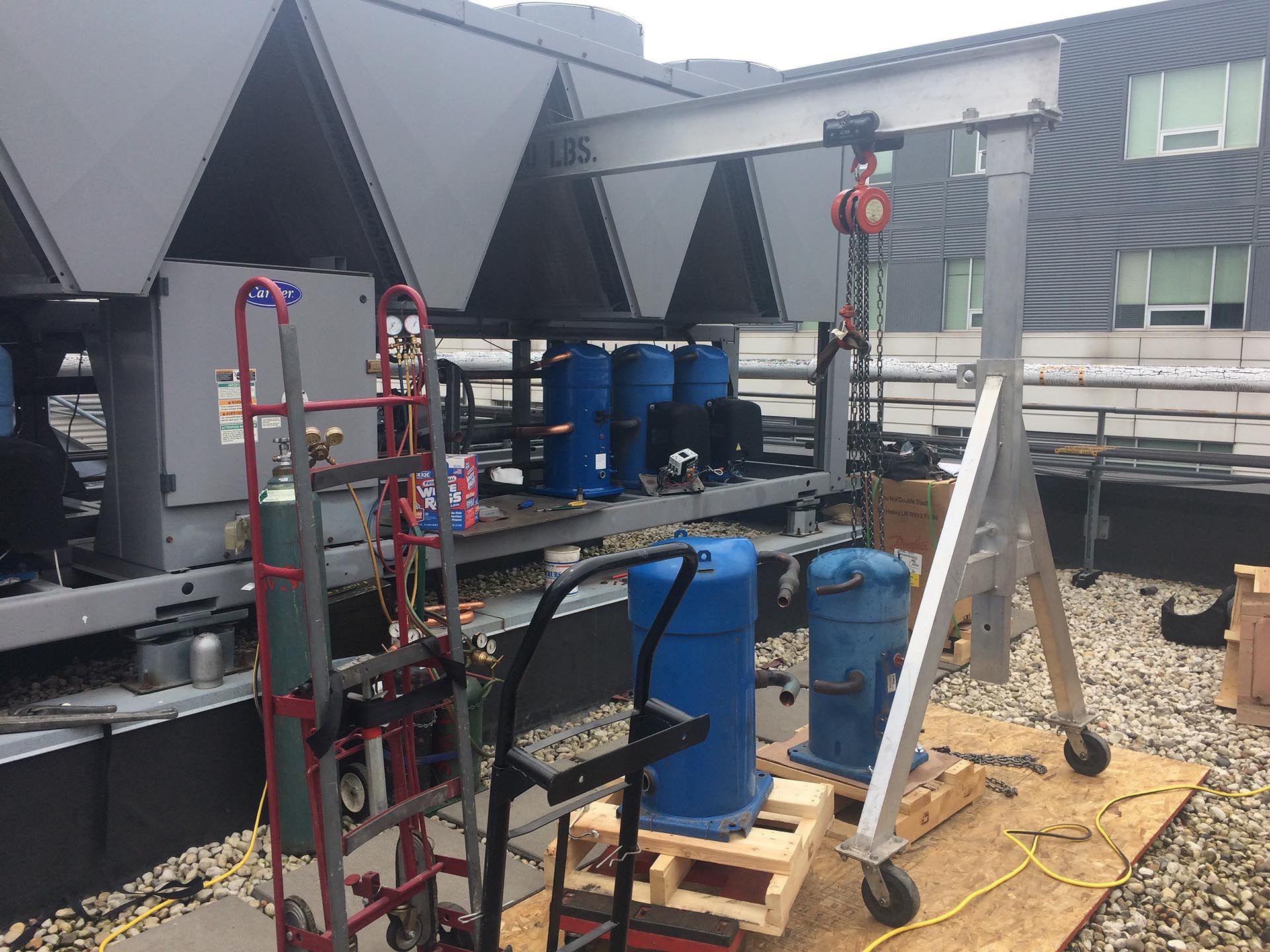
The depth behind that is specific. Chiller work is the core competence, not a sideline: high-tonnage centrifugal and screw machines, compressor overhauls, tube cleaning and replacement, with a founder who spent more than twenty years in Carrier and York factory service before starting the company in 2008. Mechanical contractors in the region subcontract their chiller work to us.
What Counts as a Commercial HVAC Emergency
If any of the following is happening in your building right now, it is an emergency call and not a next-morning ticket:
Total loss of cooling or heat across an occupied building or a production area
A chiller shutting down and taking process or comfort cooling with it
A rooftop unit offline over occupied or leased floors
A boiler failure that stops hot water or a process that depends on it
A cooling tower or pump failure that has pulled a plant's heat rejection out from under it
Alarming noise, smoke, refrigerant odor, or any condition that reads as a safety hazard
If you are not sure whether what you are looking at qualifies, call and describe it. Sorting that out over the phone costs nothing.


How an Emergency Call Is Priced and Scoped
We do not publish an emergency rate, because the honest number depends on the machine, the hour and the fault. What we will commit to is the process, and it is the same on a Sunday night as it is on a Tuesday afternoon.
On arrival the technician verifies the fault against the equipment rather than the alarm text, checks the condition of the machine around it, and identifies whether this is a repair, a temporary restoration, or a component that has reached the end of its life. Scope, timing and cost are stated before work begins, and before a truck rolls on anything beyond the initial diagnosis. If a part has a lead time, you hear the real lead time instead of a promise that a Monday morning phone call will turn into a Monday afternoon delivery.
Where We Answer Emergency Calls
Trucks run from our office on Highview Road in Waukesha, which is what keeps response short through Waukesha and Milwaukee counties. Emergency coverage extends across ten counties: Waukesha, Milwaukee, Racine, Ozaukee, Walworth, Jefferson, Dane, Dodge, Columbia and Rock. Cities inside that footprint include Waukesha, Brookfield, Pewaukee, New Berlin, Menomonee Falls, Muskego, Milwaukee and Madison.
The outer counties are covered, and how long the drive takes is stated when you call rather than after you have been waiting two hours. Full county and city coverage, including what each market's building stock tends to run, is laid out on our
service areas page.
After the Equipment Is Running Again
An emergency repair restores operation. It does not tell you why the machine failed. Once the building is stable we can run a follow-up inspection to find the actual cause, whether that was water treatment, a fouled bundle, a failed sensor, or a sequence that has been fighting the equipment for a year.
From there, a
preventative maintenance agreement puts the building on a schedule instead of a reaction cycle, and contract holders get priority when the next emergency call comes in. If you already hold an agreement with us, mention it when you call.
Questions Facility Managers Ask Before They Need Us
Who do I call when a commercial chiller shuts down at night?
Call(414) 899-4641. Advanced Chiller Services answers commercial emergency calls around the clock from a Waukesha office, and the call reaches a technician who works on high-tonnage centrifugal and screw chillers rather than an after-hours message service. Have the make, model and alarm or fault code ready and diagnosis can begin on the phone.
How fast can a technician get to my building?
Response is shortest in Waukesha and Milwaukee counties, since trucks run out of Waukesha. For buildings in Racine, Ozaukee, Walworth, Jefferson, Dane, Dodge, Columbia and Rock counties, you get an estimated arrival time on the call itself, based on where the closest technician is and what the drive actually takes at that hour.
Do you handle emergency HVAC calls for schools and manufacturing plants?
Yes, and those are a large share of the calls. School districts call when a chiller or boiler threatens a building day, and manufacturing plants call when process cooling, heat rejection or make-up air stops. We also cover office campuses, leased commercial towers and data and server rooms.
Do you work on residential systems?
No. We service commercial and industrial equipment only, which is why the truck arrives stocked for chillers, cooling towers, rooftop units, boilers and BAS controls rather than for household furnaces.
Call Now for Emergency Commercial HVAC Service
If a system is down right now, call (414) 899-4641. The same number takes a text message if it is easier to type than to talk over a running compressor. For anything that is urgent but not an emergency, a quote request reaches us through the contact form and we follow up during office hours, Monday through Friday, 8am to 5pm.
The Facilities That Call Us When Something Goes Down
The emergency line is answered for the kinds of buildings where downtime has a number attached to it:
- School districts and individual district buildings across Waukesha County and the Milwaukee metro
- Office campuses and leased commercial properties with tenants on the floors above the equipment
- Manufacturing and industrial plants running process cooling, heat rejection and make-up air
- Data and server rooms where a cooling loss becomes an equipment loss
- Multi-facility portfolios spread across several counties
- Mechanical contractors who subcontract chiller work to our technicians
Family owned, based in Waukesha, in business since 2008, insured and bonded.
Call (414) 899-4641 to reach a technician, or send a quote request to schedule a site visit and get scope, timing and cost in writing before anything is committed.
Let's Talk Through Your HVAC or Chiller Problem
Call (414) 899-4641 to reach a technician, or send a quote request to schedule a site visit and get scope, timing and cost in writing before anything is committed.