Commercial HVAC Preventative Maintenance Programs
Scheduled maintenance built around the equipment in your building and what happens when it goes down, with the task list, the visit schedule and the exclusions in writing before anything is signed.
Commercial HVAC Preventative Maintenance Across Southeastern Wisconsin
Commercial HVAC preventative maintenance is scheduled labor against a written task list, performed on the specific machines your building runs. We hold maintenance agreements on chillers, boilers, rooftop and packaged units, cooling towers, split systems and building automation controls for facilities in Waukesha County, the Milwaukee metro, Madison and the ten southeastern Wisconsin counties we cover.
A program and an agreement are the same thing, whichever your district or your accounting department calls it. Call (414) 899-4641
to schedule a walkthrough. We are family owned, based in Waukesha, operating since 2008, insured and bonded, and we state scope, timing and cost before a truck rolls.
What Deferred Maintenance Actually Looks Like in a Wisconsin Building
Deferred maintenance does not announce itself. It shows up as specific conditions with specific bills attached:
A fouled condenser or dirty tube bundle costing energy every hour the chiller runs, months before it costs a compressor.
A cooling tower left dirty going into a Wisconsin winter, with freeze protection nobody verified in October.
A rooftop economizer stuck on outside air in January, heating the building against itself.
A boiler with a combustion setup nobody has recorded readings on and a low-water cutoff nobody has tested.
A chiller that fails on the first ninety-degree day, when every service company in the metro is already booked out.
A spring cooling startup finds the fouled condenser, the low charge and the failing starter contactor in April, while it is still a repair on a schedule instead of an emergency at 6am. Where a maintenance finding turns into an efficiency or replacement project, we also help facilities evaluate Focus on Energy business incentives.
What Is Actually in a Maintenance Visit, Equipment by Equipment
You own specific machines, so the task list is written against them. These are the HVAC preventative maintenance services a visit covers, by equipment class.
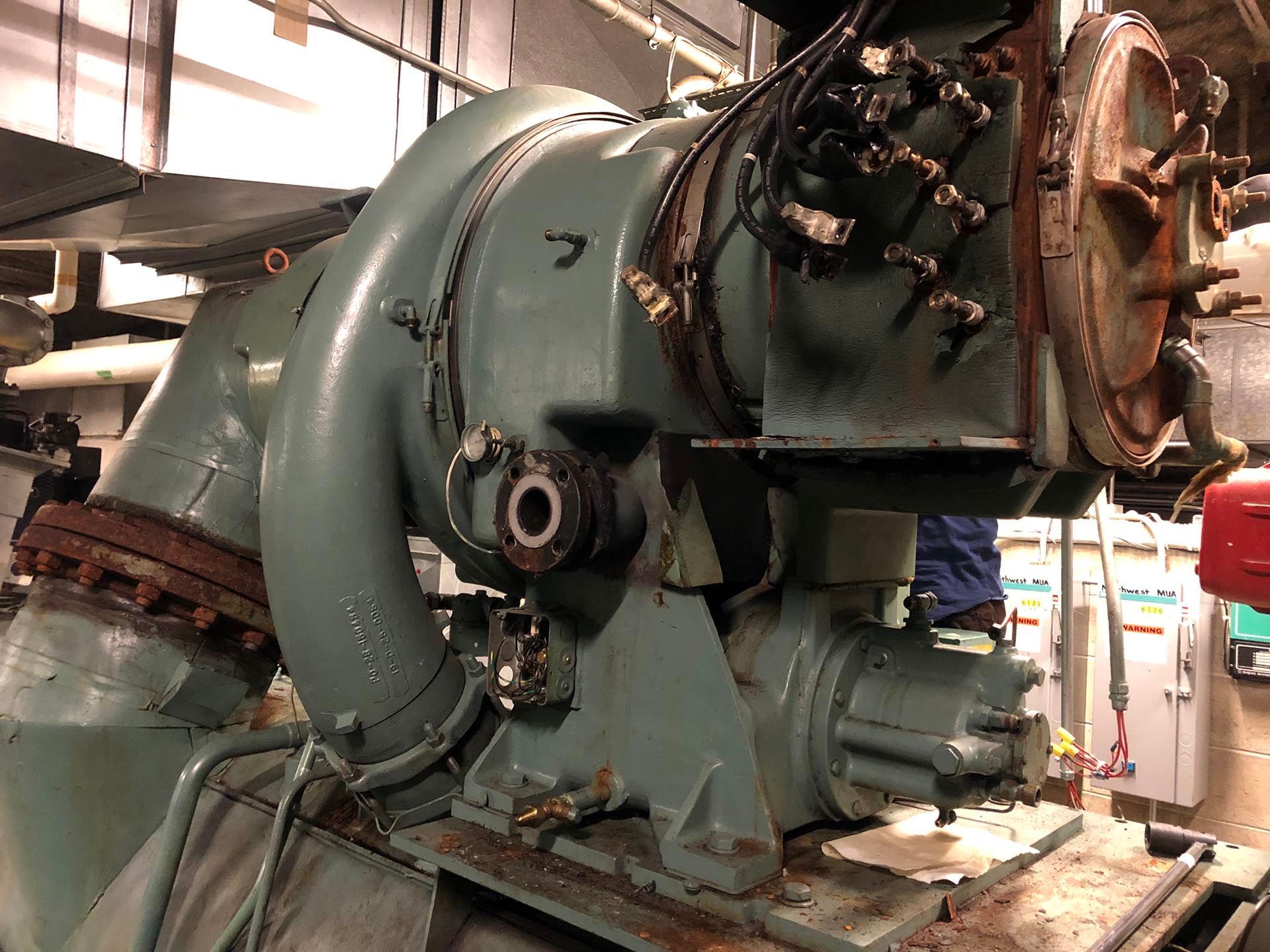
Refrigerant and oil pressures logged, approach temperatures recorded and compared against previous visits, oil analysis, compressor amp draw and vibration checked, starter and VFD inspection, condenser tube condition assessed with cleaning scheduled on interval, purge run time tracked on low-pressure machines, and controls and safeties verified. The chiller is the highest-consequence asset on most programs and the deepest competence we have.
Combustion analysis with readings recorded to the visit report, low-water cutoff tested, flame safety control and pilot proving verified, relief valve checked, gas train and burner condition inspected, and water treatment condition reviewed. Fall heating startup happens before the first hard freeze, not after the first no-heat call.
Charge verified against superheat and subcool rather than by gauge pressure alone, economizer operation and outside-air damper position confirmed, belts and blower assembly inspected, condensate drain and curb checked for standing water and leaks, and the gas heat section checked before fall.
Cooling Towers
Basin and fill cleaned, drift eliminators inspected, gearbox oil checked and changed on interval, float and makeup assembly adjusted, water treatment coordinated with your chemical vendor, and freeze protection verified before winter.
Schedules verified against actual occupancy, sensors calibrated against measured conditions, overridden points found and released, and trend logs reviewed so a drifting machine is caught in data before it is caught by an occupant.
Documentation & Reporting
Every visit produces a written report covering work performed, equipment condition and recommended repairs. That record is what satisfies manufacturer warranty requirements, what survives a facilities-director turnover or a board question, and what turns "the chiller is old" into a dated, evidenced replacement recommendation your capital request can stand on.

How Often Your Equipment Should Be Serviced
Visit frequency is a decision about consequence, not a package tier. We set the interval against the equipment and what happens when it fails.
- Monthly, quarterly or bi-annual schedules, chosen per equipment group rather than per building.
- A spring cooling startup completed before the first stretch of hot weather, and a fall heating startup completed before the first hard freeze.
- Tighter intervals on critical equipment, including a chiller carrying a data room, a process cooling load tied to a production line, or the only air handler serving an occupied floor.
- Longer intervals where the consequence is genuinely lower, such as a rooftop unit over a warehouse aisle.
- Visits scheduled around your hours, including off-peak work for schools and 24/7 operations.
Scope and Pricing, Stated Plainly
The line between scheduled work and a repair is the thing worth knowing before you sign a commercial HVAC maintenance agreement, so ours states it up front.
In scope: the scheduled labor and the written task list, on the equipment named in the agreement, at the visit frequency named in the agreement.
Not in scope: repairs. A failed compressor, a cracked tube bundle, a burner replacement or a bad VFD is quoted separately, at contract labor and parts rates. Consumables and filters are called out by name so there is no argument about them later.
Pricing is built from your equipment list and your visit frequency after a walkthrough of the buildings, and the equipment list, task list and exclusions go in writing before anything is signed.
How a Maintenance Program Runs in a School District
Districts
are the buildings we know best, and a district program is a scheduling and recordkeeping problem as much as a mechanical one.
- Major work scheduled into summer break, with the rest into school-year off-hours so a boiler inspection is not happening over a classroom during third period.
- Equipment inventoried building by building, so the chiller at the high school and the unit ventilators at the elementary are on separate task lists with separate intervals.
- Written visit reports filed per building, so an equipment history survives a facilities-director turnover or a question from the board.
- Replacement planning aligned to a fiscal year and a referendum calendar rather than to a failure.
We run the same programs for office campuses, retail centers, manufacturing plants and industrial facilities across the region, with process and production loads carrying the tightest intervals.
What a Contract Gets You Beyond the Visits
- Priority response when something does fail, ahead of unscheduled callers during the weeks the whole metro is calling at once.
- Preferred labor and parts rates on covered repairs.
- Service records and warranty documentation tracked for you.
- Proactive replacement planning built from documented equipment history.
- A technician who already knows your plant, because the same people keep coming back to it.
Emergency calls from contract customers reach a technician rather than an answering service.
Questions Facility Managers Ask Before Signing
What is included in a commercial HVAC preventative maintenance agreement?
Scheduled labor against a written task list, performed on the equipment named in the agreement at the frequency named in the agreement. On a chiller that means logged pressures and approach temperatures, oil analysis, amp draw and vibration, starter and VFD inspection, condenser tube condition, and verified controls and safeties. On a boiler it means recorded combustion readings, a low-water cutoff test, flame safety control verification and gas train inspection. Repairs are a separate line, quoted when something is found.
How often should commercial HVAC equipment be serviced?
Twice a year is the practical floor for most equipment, with a cooling startup in spring and a heating startup in fall. Chillers carrying a data room or a process load, cooling towers, and the only air handler over an occupied floor usually warrant quarterly or monthly attention. We set the interval against what the equipment does and what happens when it stops, not against a tier name.
Is a maintenance contract worth it for a small office building?
For a small building with two or three rooftop units, an agreement is mostly about catching the cheap failures early: a stuck economizer, a low charge, a failing contactor, a condensate drain backing up into the curb. The visits are short and the schedule is light. The value is the priority response and the written history when one of those units comes up for replacement.
Do you offer HVAC maintenance agreements in Waukesha County and the Milwaukee area?
Yes, and across Madison and the ten southeastern Wisconsin counties we serve. A walkthrough produces the equipment list, the task list, the visit frequency per machine and the exclusions in writing, so you can set our agreement beside any other bid and compare line for line rather than tier for tier. Call(414) 899-4641to schedule one.
Who Maintains the Equipment
Dozens of facilities across Waukesha, Milwaukee, and Southeastern Wisconsin rely on us to maintain their HVAC systems year after year.
Founder Jim Jensen spent more than twenty years in Carrier and York factory service before starting Advanced Chiller Services in 2008. Our technicians hold master certifications and factory training from major equipment manufacturers, we are family owned and based in Waukesha, insured and bonded, and mechanical contractors subcontract chiller work to us. Scope, timing and cost are stated before a truck rolls.
Start With a Walkthrough, Not a Contract
The first step is a look at the buildings you run. We inventory the equipment, propose an interval for each machine, and give you a task list and a schedule you can compare against anything else on your desk. Call (414) 899-4641 Monday through Friday, 8am to 5pm, or request a quote and we will schedule the walkthrough.
Maintenance Programs Across Ten Southeastern Wisconsin Counties
We hold maintenance agreements in Waukesha, Milwaukee, Racine, Ozaukee, Walworth, Jefferson, Dane, Dodge, Columbia and Rock counties, including Waukesha, Brookfield, Pewaukee, New Berlin, Menomonee Falls, Muskego, Milwaukee and Madison. Facility managers and mechanical contractors call us when the plant is complex, downtime is not an option, and one team needs to cover both the mechanical equipment and the controls running it.