Commercial Rooftop Unit Repair and Replacement
We service the whole packaged unit, the cooling side, the gas heat section and the controls that run both, so a rooftop complaint gets diagnosed on the roof instead of narrowed down over three visits.
Call (414) 899-4641 to reach a technician about a rooftop unit that is down, short-cycling or generating tenant complaints.
Energy use climbing with no change in occupancy, frequently an economizer actuator stuck on outside air or a control sequence nobody has looked at since the unit was installed.
What We Find on the Roof When a Unit Stops Performing
Most rooftop calls start as a comfort complaint on a floor and end at a specific component on the curb. These are the conditions we are called out for most often across Waukesha and the Milwaukee metro, and what usually sits behind them.
A unit that will not start or short-cycles, often a failed contactor, capacitor, control board or a safety tripping on high head pressure
Weak or no air at the diffusers, which points at a slipping belt, a failing blower motor, a plugged filter bank or static pressure the unit was never set up for.
Warm supply air with the compressor running, usually charge loss at a line set or TXV, a fouled condenser coil, or a compressor no longer pumping.
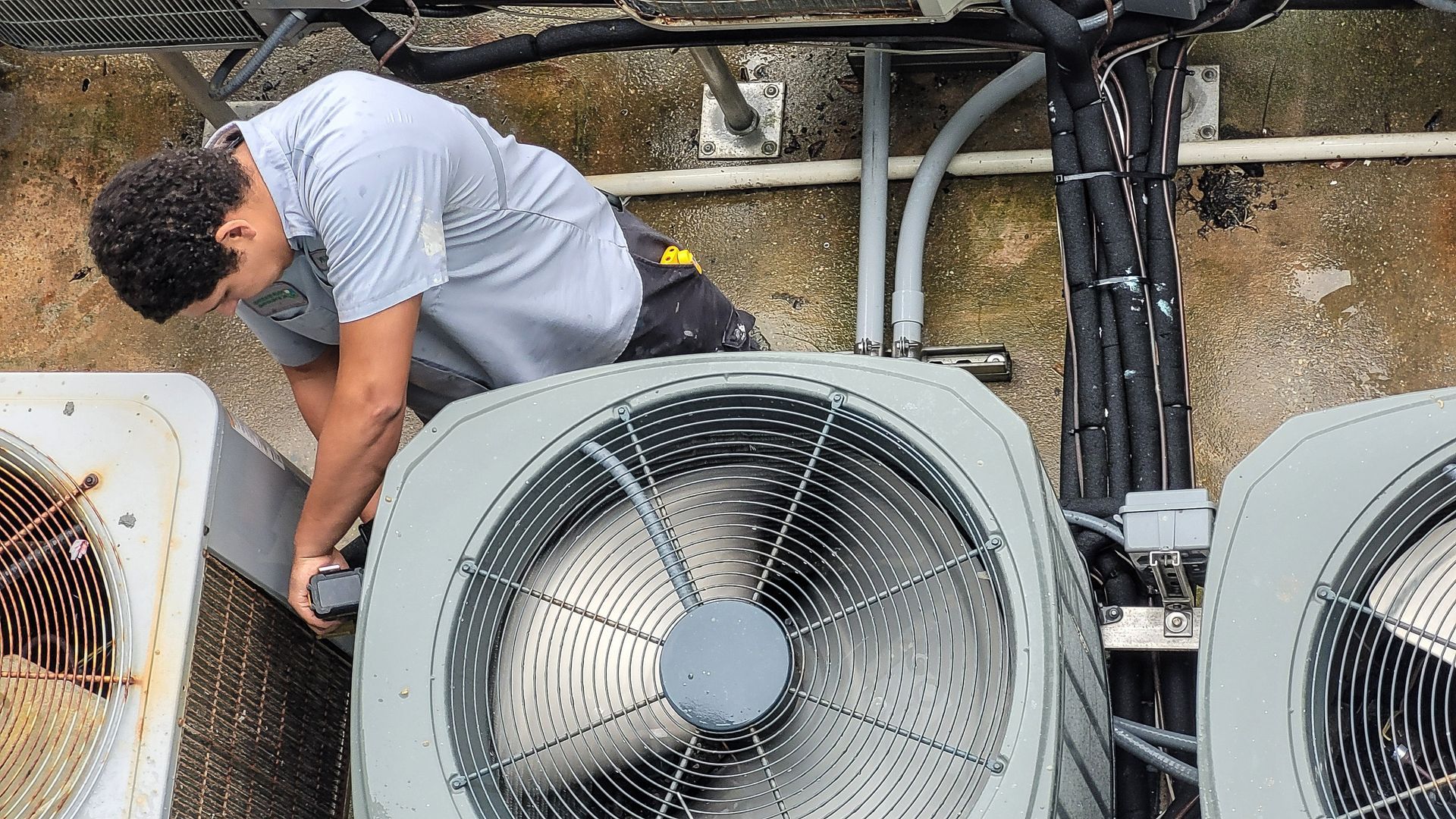
A condenser fan grinding or seized, which takes the unit's ability to reject heat with it on the hottest day of the year.
Water pooling on the roof curb or staining ceiling tiles below, from a blocked condensate drain, a failed trap or a curb and flashing detail that has opened up.
Energy use climbing with no change in occupancy, frequently an economizer actuator stuck on outside air or a control sequence nobody has looked at since the unit was installed.
No heat from a rooftop unit in December, on the gas side of the same cabinet that cooled the space in July.
We diagnose the unit in front of us rather than replacing parts in sequence, and we tell you which of your rooftop units is actually driving the complaints.
Components We Repair and Replace on Packaged Rooftop Units
Rooftop unit repair means working through a self-contained machine that carries cooling, heating, air movement and controls in one cabinet. The parts we carry and replace:
Scroll and reciprocating compressors, including compressor replacement on units still worth the investment.
Condenser and evaporator fan motors, blower assemblies, bearings and belts.
Contactors, capacitors, relays, transformers and control boards.
Economizer actuators, dampers, linkages and outside-air sensors.
Refrigerant lines, filter driers, TXVs and service valves, with charge verified after every repair.
Gas valves, igniters, flame sensors, inducers and heat exchanger inspection on the heat section.
Roof curb, condensate pan, trap and drain line repairs.
Our technicians hold master certifications and factory training from major equipment manufacturers, which is how we work across the packaged equipment lines running on commercial roofs in this market, Carrier, Trane, York and Lennox among them. That training is the reason we can take a unit apart, not a dealer arrangement.
What a Rooftop Unit Service Visit Actually Includes
A rooftop visit that only reads a thermostat and a suction gauge finds the same problem again next month. Here is what we do on the roof.
Measure airflow and static pressure
We verify the unit is moving the air it was designed to move, across the filters, the coil and the ductwork, before touching refrigerant.
Verify charge against superheat and subcool
Charge is confirmed by measurement rather than by sight glass or gauge pressure alone, so a low charge gets traced to a leak instead of topped off.
Check economizer operation and outside-air position
We drive the actuator through its range, confirm the changeover setpoint and check that the unit is not free-cooling in January or pulling outside air in August.
Test safeties and controls
High and low pressure switches, freeze and limit controls, the control board sequence, and the gas heat safeties are tested rather than assumed.
Inspect the curb, condensate drain and cabinet
Drain and trap cleared, pan checked, curb and panel seals inspected, because a rooftop leak shows up as a ceiling problem long before anyone looks at the roof.
Confirm delivered conditioned air
We verify supply temperatures and zone conditions at the spaces the unit serves, so the visit ends with proof the complaint is resolved.
You get scope, timing and cost before a truck rolls, and findings in writing after the visit.
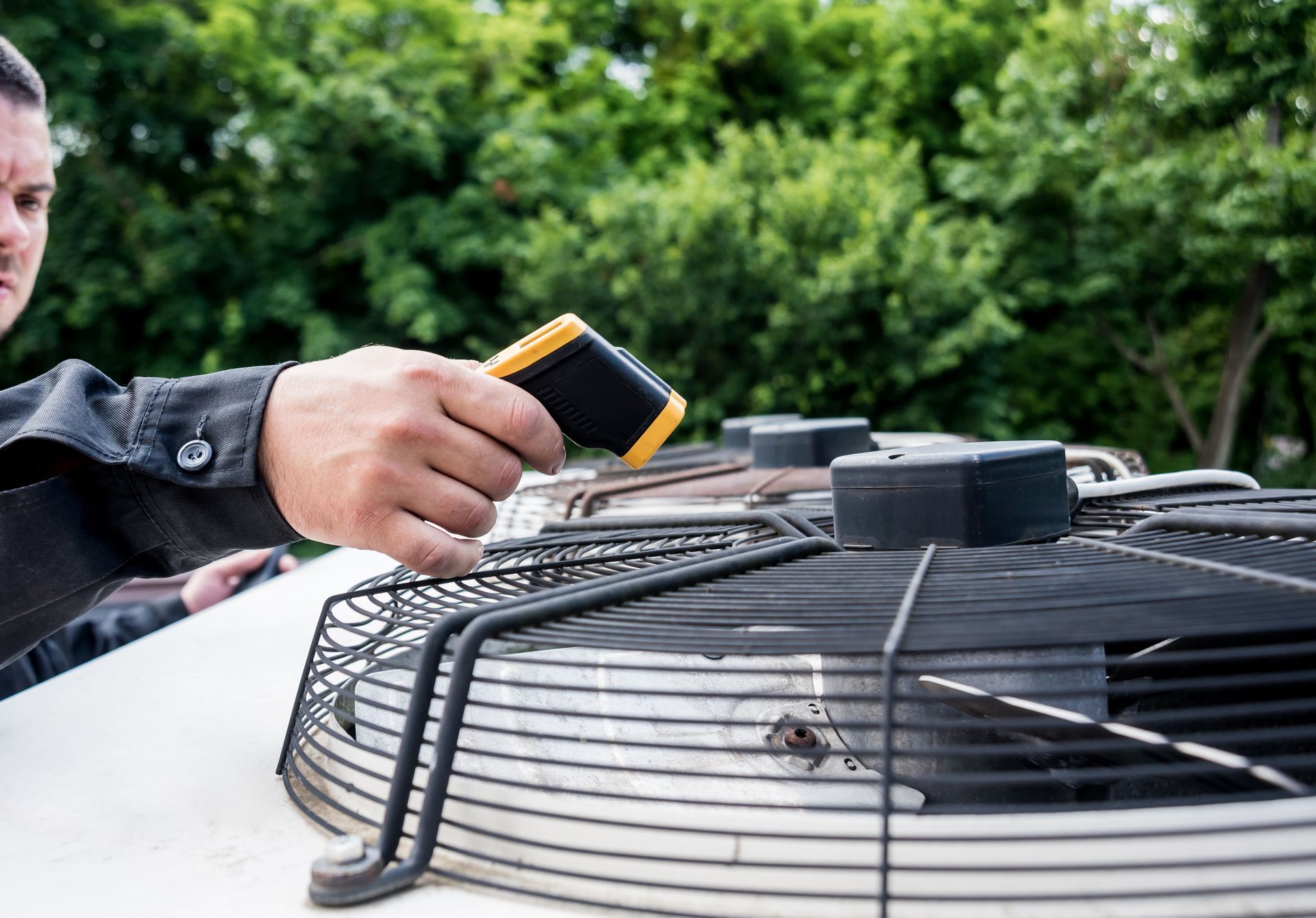
Repair or Replace a Rooftop Unit, Decided Before Peak Season
This is the decision most facility managers are actually weighing, and it is easier to make in April than in the middle of a July heat stretch. We lay out the same factors every time.
Unit age against the service life the equipment class realistically has left.
Repair history on that specific unit, since a repeat repair record is a different conversation than a first failure.
Whether the failure is one isolated component with a clear root cause or a system generating recurring complaints from several directions.
Part availability, which tightens considerably on older units and on discontinued control platforms.
What the building pays in energy either way, since an aging unit runs on every cooling hour of the season.
Timing, because a replacement planned against a budget cycle costs less than a changeout ordered during a failure.
A targeted repair on a newer unit with a diagnosed root cause is usually the right call. A unit with a repeat repair history deserves a replacement conversation before hot weather forces a rushed one. We also help facilities evaluate Focus on Energy business incentives when the decision lands on replacement, and we write the numbers down so the recommendation can go to whoever signs for it.
Scheduled service is what keeps this decision from being made under pressure. A rooftop unit on a
maintenance program gets its economizer, charge, belts and gas heat section checked before the season that stresses them.
Timing, because a replacement planned against a budget cycle costs less than a changeout ordered during a failure.
Rooftop Changeouts, Planned Around the Building Below
A rooftop unit replacement is as much a logistics project as a mechanical one, and the building underneath keeps operating while it happens. What we plan before the day of the changeout:
Roof access and the path for equipment, tools and the old unit coming down.
Curb dimensions and whether a curb adapter lets the new unit land on the existing opening instead of opening the roof.
Crane or rigging placement, parking and lot closures, and coordination with your roofing contractor where the membrane is involved.
Electrical, gas and control connections at the new unit, including tie-in to an existing building automation system.
Scheduling around occupancy, tenant hours, retail traffic or a school calendar, including weekend and off-hours work.
Multi-tenant offices, retail centers and school buildings carry most of the rooftop equipment in southeastern Wisconsin, and the tenant or the school day is the constraint the schedule gets built around.
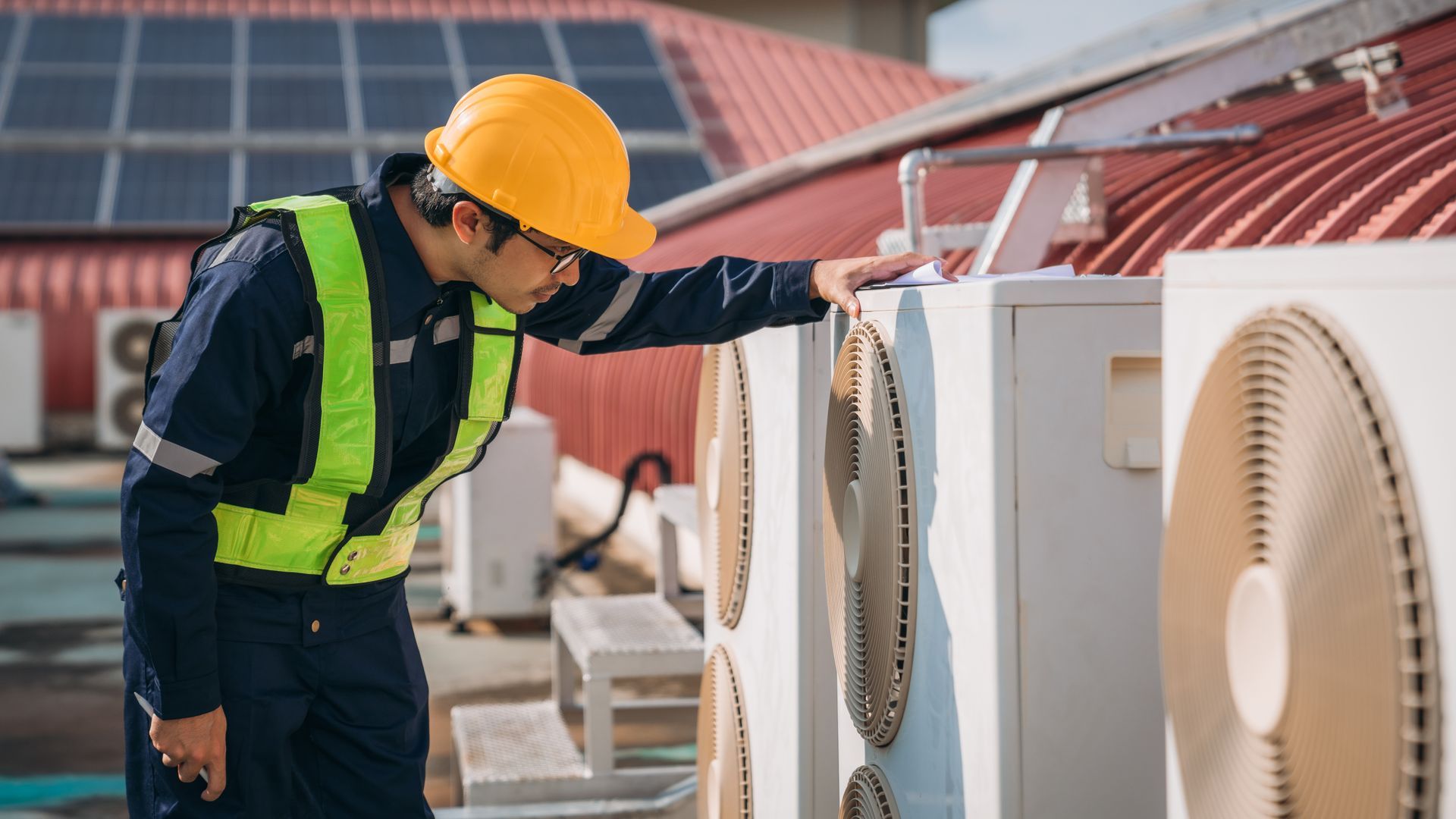

When a Rooftop Unit Goes Down and the Building Is Warming Up
Emergency calls reach a technician, not an answering service. Tell us the unit, the building and what the space is doing, and you get an honest read on when someone can be on the roof and what the visit will cost.
Rooftop failures do not wait for business hours, and a packaged unit down over a leased floor or a full retail sales area turns into a tenant problem within hours. Our office runs Monday through Friday, 8am to 5pm, and after-hours rooftop calls are answered outside them.
Rooftop Unit Service Across Ten Southeastern Wisconsin Counties
We are family owned, based in Waukesha and have been servicing commercial and industrial equipment since 2008. We are insured and bonded, and rooftop work runs across Waukesha, Milwaukee, Racine, Ozaukee, Walworth, Jefferson, Dane, Dodge, Columbia and Rock counties, including Brookfield, Pewaukee, New Berlin, Menomonee Falls, Muskego, Milwaukee and Madison.
The buildings we work on are school districts and district facilities, office campuses, retail centers, and commercial and industrial plants across the Milwaukee metro and Waukesha County. Rooftop units sit inside a broader
commercial cooling practice that also covers split and packaged systems, cooling towers and chillers, so a rooftop diagnosis that turns out to be a plant problem stays with the same contractor.
Rooftop Unit Questions Facility Managers Ask Us
Why is my rooftop unit blowing warm air?
Warm supply air with the compressor running usually means the unit cannot move heat out, from refrigerant charge lost at a leak, a fouled condenser coil, a seized condenser fan or a compressor that is no longer pumping. It can also be a control or economizer fault holding the unit in a mode it should not be in. A charge measurement and a static pressure reading separate those causes on the first visit.
Should I repair or replace a 15 year old commercial RTU?
Age alone does not decide it. A fifteen year old unit with one failed component, a clear root cause and available parts is often worth repairing, while the same unit with a repeat repair history, a discontinued control platform and rising energy use is a replacement candidate. We put unit age, repair history, part availability and energy cost side by side in writing, and we help evaluate Focus on Energy business incentives before the decision is made.
How much does it cost to replace a commercial rooftop unit?
A rooftop changeout is priced from the tonnage and equipment class, whether the new unit lands on the existing curb or needs a curb adapter, the crane and rigging the roof requires, and the electrical, gas and control tie-ins involved. We survey the roof and the existing unit before quoting, and you get scope, timing and cost in writing rather than a range that changes on install day.
Who repairs commercial rooftop units in Waukesha?
Advanced Chiller Services services commercial packaged rooftop units across Waukesha County and the Milwaukee metro, including compressor replacement, economizer and control faults, blower and motor work, and the gas heat section. We are commercial and industrial only, and calls come to(414) 899-4641
Does a rooftop unit need service in the fall if it only runs cooling in summer?
Yes, because the same cabinet carries the gas heat section that runs all winter. A fall visit tests the gas valve, igniter, flame sensor, inducer and heat safeties, checks the heat exchanger, and confirms the economizer is not stuck on outside air during a cold snap. Finding a dead heat section in October is a service call; finding it in January is a no-heat emergency.
Can you tie a new rooftop unit into our existing building automation system?
We install and program controls as well as service the mechanical equipment, so a new rooftop unit gets integrated into the existing front end with its schedules, setpoints and alarms intact. That also means an economizer or control board fault gets diagnosed by the same team servicing the compressor, instead of moving between a mechanical contractor and an integrator.
Get a Rooftop Unit Diagnosed Instead of Guessed At
Tell us the units you run, the building they serve and what the complaints look like, and we will get on the roof, diagnose what is actually failing and put the repair or replacement decision in writing. Commercial and industrial facilities only, across southeastern Wisconsin.
Call (414) 899-4641, Monday through Friday, 8am to 5pm, with emergency rooftop calls answered outside office hours.