HVAC Controls & Building Automation Systems

We install, program and troubleshoot the building automation system that runs your mechanical equipment, and we service the equipment itself, so a fault that crosses from a controller into a compressor stays with one team from the first call to the fix.

Building Automation System Service Across Southeastern Wisconsin

We design, install, program, integrate and repair BAS controls for commercial and industrial facilities in Waukesha, Milwaukee, Madison and the ten southeastern Wisconsin counties we cover, from a packaged rooftop unit on a commercial stat to a campus running hundreds of points on a supervisory front end.


Call (414) 899-4641 to schedule a controls audit or a BAS site survey. We are family owned, based in Waukesha, insured and bonded, and we state scope, timing and cost before a truck rolls.

One Team for the Chiller and for the Controls Running It

Our technicians are cross-trained on the mechanical equipment and on the DDC controls that operate it. When chilled water never reaches setpoint, the same crew checks the reset schedule at the front end, the sensor reporting the temperature, and the compressor staging behind it, on one visit and in one conversation.


One vendor for both means a facility does not hire a separate integrator or field a second contractor when a fault crosses the line between the equipment and the system running it. Founder Jim Jensen spent more than twenty years in Carrier and York factory service before starting the company in 2008, and our technicians hold master certifications and factory training from major equipment manufacturers.

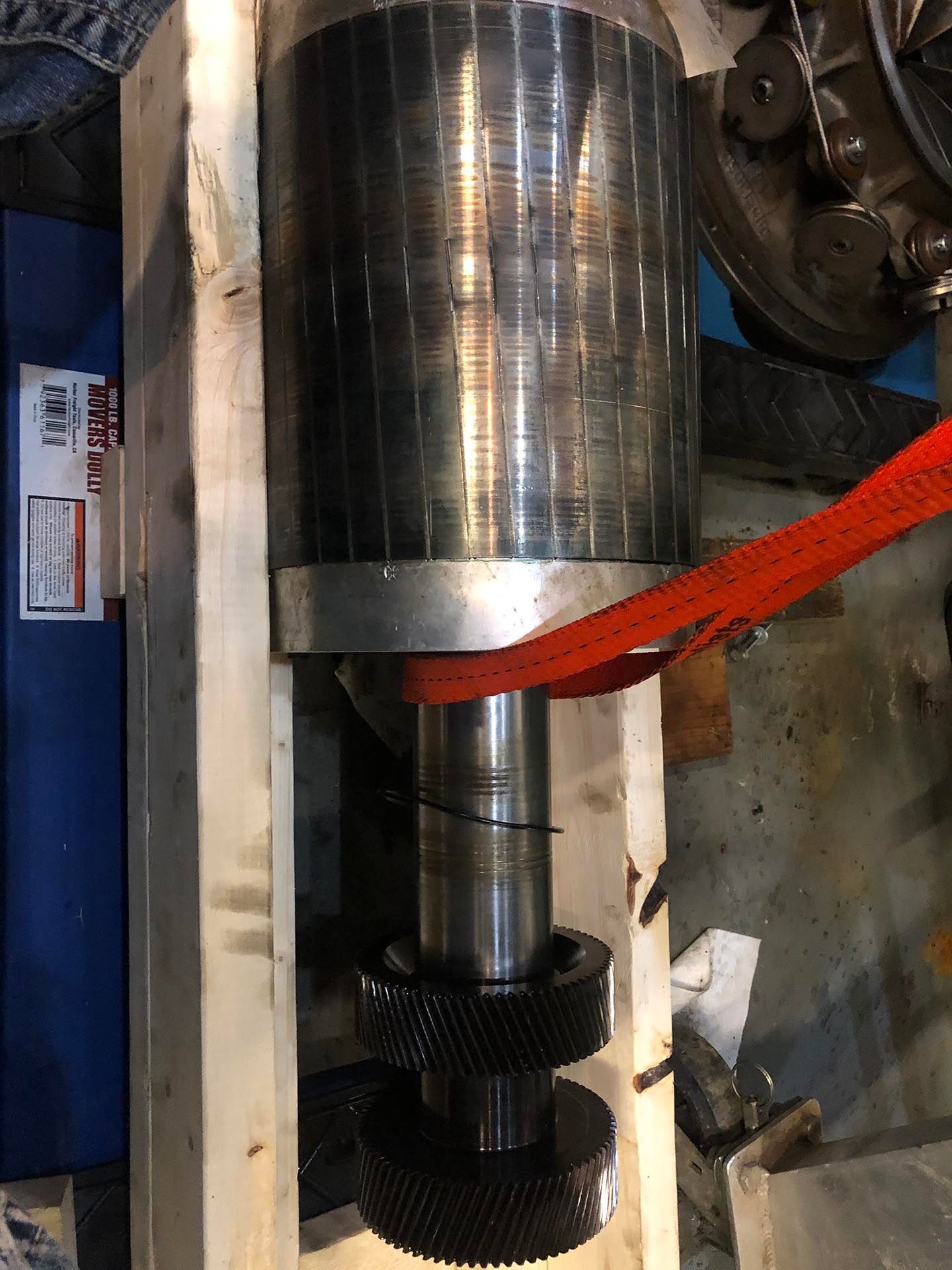
Close-up of a metal shaft with a large polished cylinder and orange strap in an industrial setting

What a Building Automation System Is, in a Real Building

In a commercial building, a building automation system is four layers of hardware and software doing one job together:

Black right-pointing arrow icon on a white background

Field sensors and end devices, including space and duct temperature sensors, humidity and CO2 sensors, pressure transmitters, damper and valve actuators, and VFD interfaces.

Black right-pointing arrow icon on a white background

DDC controllers mounted at the equipment, running the logic for a chiller plant, an air handler, a boiler, a rooftop unit or a group of VAV boxes.

Black right-pointing arrow icon on a white background

A supervisory front end with graphics, schedules, alarms and trend logs, where a building engineer sees the whole plant on one screen.

Black right-pointing arrow icon on a white background

The control network tying it together, most often BACnet MS/TP at the equipment and BACnet/IP between buildings.

What the system does with those layers is run occupancy schedules, hold setpoints, execute sequences of operation, log trends and raise alarms. That is the difference between equipment that happens to be running and a plant you can prove is running correctly.

What the system does with those layers is run occupancy schedules, hold setpoints, execute sequences of operation, log trends and raise alarms. That is the difference between equipment that happens to be running and a plant you can prove is running correctly.

Pink electric scooter with beige seat on a soft pink background

Add your title here

Pink electric scooter with beige seat on a soft pink background

This is the text area for this paragraph.To change it, simply click and start typing. Once you've added your content, you can customize its design by using different colors,fonts, font sizes and bullets. Just highlight the words you want to design and choose from the various options in the text editing bar.

This is the text area for this paragraph.To change it, simply click and start typing. Once you've added your content, you can customize its design by using different colors, fonts, font sizes and bullets. Just highlight the words you want to design and choose from the various options in the text editing bar.

Pink electric scooter with beige seat on a soft pink background

Add your title here

Add your title here

This is the text area for this paragraph.To change it, simply click and start typing. Once you've added your content, you can customize its design by using different colors, fonts, font sizes and bullets. Just highlight the words you want to design and choose from the various options in the text editing bar.

  • Title or Question

    Describe the item or answer the question so that site visitors who are interested get more information. You can emphasize this text with bullets, italics or bold, and add links.
  • Title or Question

    Describe the item or answer the question so that site visitors who are interested get more information. You can emphasize this text with bullets, italics or bold, and add links.
  • Title or Question

    Describe the item or answer the question so that site visitors who are interested get more information. You can emphasize this text with bullets, italics or bold, and add links.


Building Automation Work We Perform

  • BAS Installation & Upgrades

    We design and install new building automation systems and expand existing ones, working on the platforms already in southeastern Wisconsin buildings: Johnson Controls, Honeywell, Carrier i-Vu, Trane Tracer, Siemens and Niagara-based supervisory front ends. Factory training with major manufacturers is why we can take over a system somebody else installed instead of asking you to replace it.

  • Controls Programming & Sequence Optimization

    Most comfort complaints and most energy waste come from sequences nobody has looked at in years. The programming work we perform includes:


    • Occupancy scheduling and optimum start/stop, so a building is at setpoint when people arrive and not four hours early.
    • Discharge air temperature reset and hot water reset tuned to actual load rather than a fixed value.
    • Chilled water setpoint reset, coordinated with how the plant actually stages.
    • VAV box and zone rebalancing where a space has been repurposed since the system was commissioned.
    • Economizer changeover and outside-air damper position verified against the sequence, not the graphic.
    • CO2-based demand-controlled ventilation in gyms, cafeterias, lecture halls and other spaces with swinging occupancy.
    • Alarm thresholds set so an alarm means something and staff stop ignoring the list.
    • Trend logs pulled and reviewed, so a persistent complaint gets settled with data instead of a meeting.

  • Troubleshooting & Repairs

    We diagnose the control faults that are hardest to pin down because the equipment looks fine while it runs:


    • A temperature or pressure sensor out of calibration, reporting a number the plant is obediently reacting to.
    • A controller off the network, holding its last command with nobody watching it.
    • An MS/TP trunk with a wiring, termination or duplicate-address fault taking down a run of devices.
    • A stuck damper or valve actuator the graphic reports as commanded open.
    • A front end showing a zone in alarm while the equipment serving it operates normally.
    • An overridden point somebody left in hand two years ago and never released.

    When a controller failure or a network fault puts a building down, our emergency calls reach a technician rather than an answering service.


  • System Integration

    We integrate equipment and systems that were never meant to talk to each other, including BACnet integration between a chiller controller and an existing building automation system, Modbus devices such as meters and drives, and legacy LonWorks controllers. We also bring lighting, security and fire and life safety onto a unified interface, with DDC and remote monitoring for real-time oversight of one building or a portfolio.

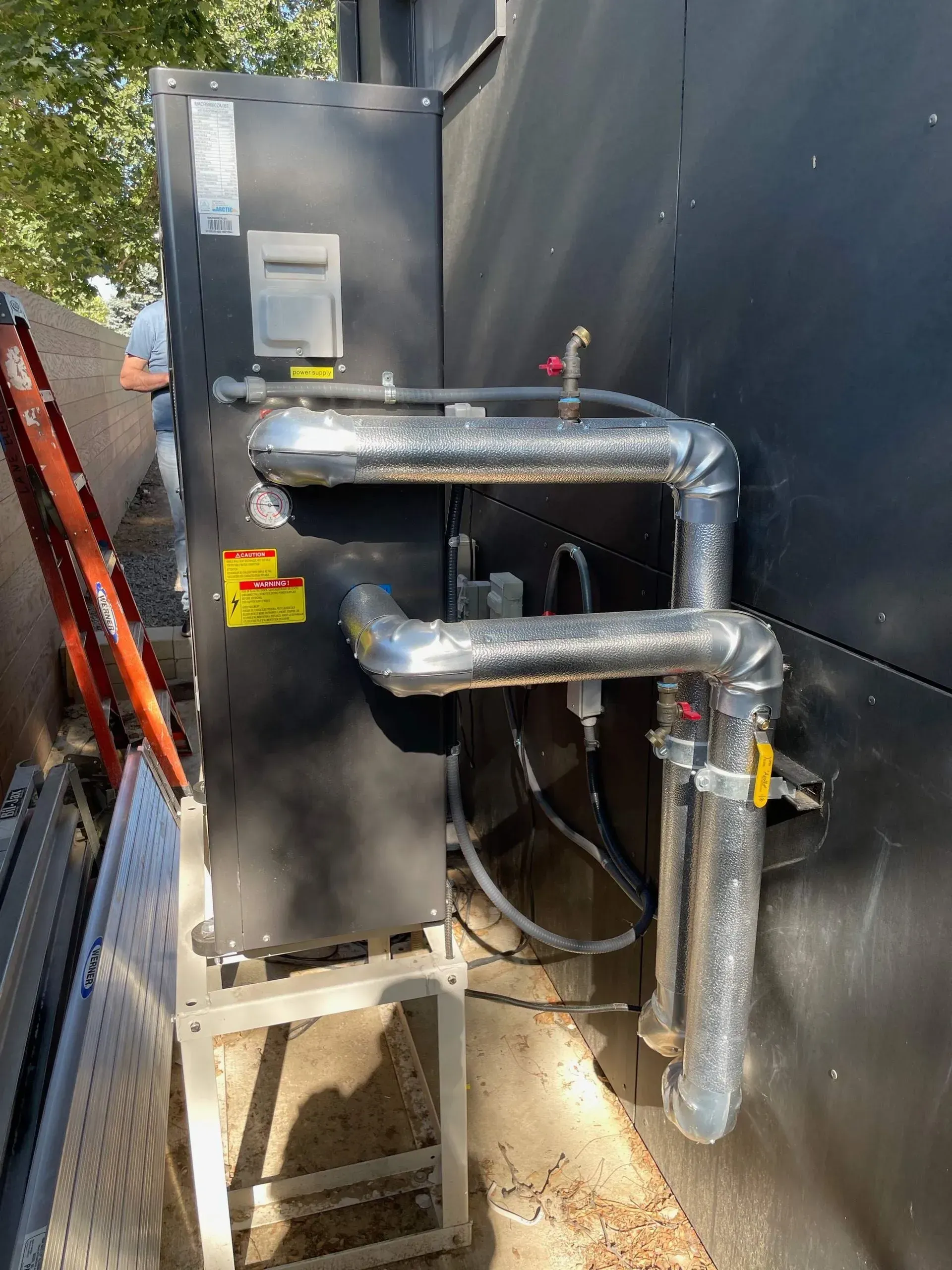
Insulated pipes on a black industrial unit beside a metal ladder and a worker in the background
Technician in hard hat using a laptop and inspecting industrial equipment in a factory hallway

What Better Controls Change About Running the Building

Facility staff are asked to run more square footage with fewer people, and the control system is the leverage. A current BAS with sequences that match the building will:

Black right-pointing arrow icon on a white background

Cut energy waste through scheduling, resets and monitoring tied to real occupancy.

Black right-pointing arrow icon on a white background

Surface a developing problem as an alarm or a trend before it becomes an after-hours call.

Black right-pointing arrow icon on a white background

Allow remote access and adjustment across a single building or a portfolio of them.

Black right-pointing arrow icon on a white background

Support energy code compliance and district or corporate efficiency reporting.

Trending and alarming are also what make a maintenance program predictive instead of reactive, because a technician arrives already knowing which machine drifted and when.

Not Every BAS Upgrade Starts With Ripping Out the Controllers

If your front end is on a version nobody supports, the question worth answering first is what the building already has that is still worth keeping. We survey the existing points list, controller generation and network before quoting anything, then tell you what can stay.

Black right-pointing arrow icon on a white background

An aging or unsupported supervisory front end can often be replaced while serviceable field controllers, sensors and actuators stay in place.

Black right-pointing arrow icon on a white background

An obsolete controller generation, a discontinued proprietary protocol or a closed platform limits what can be reused, and we say so directly rather than after the purchase order.

Black right-pointing arrow icon on a white background

Pneumatic zone equipment and failed actuators are usually the honest replacements in an otherwise reusable system.

Black right-pointing arrow icon on a white background

A phased migration lets a district or a campus convert building by building against a budget cycle instead of funding a whole-site cutover in one year.

School districts run the most zones on the oldest front ends, and a phased plan tied to summer break is usually how those projects actually get done.

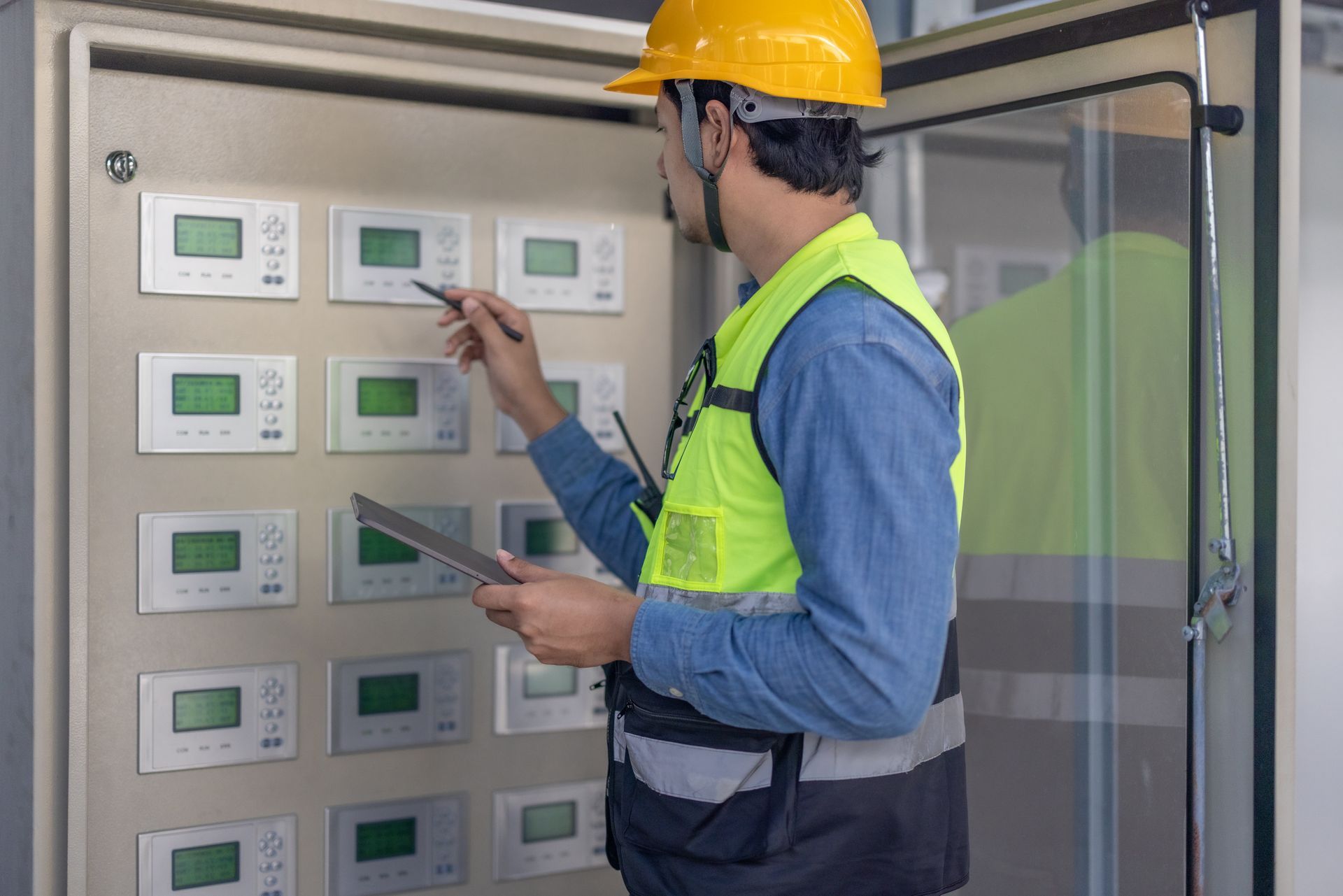
Worker in yellow hard hat inspecting electrical control panels in a utility room
Blue ACS logo on a white background

Platforms We Work On and Buildings We Work In

We work on the controls platforms and protocols already installed in this market rather than asking a facility to standardize on ours: BACnet MS/TP and BACnet/IP, Modbus, LonWorks, Niagara-based front ends, and manufacturer systems from Johnson Controls, Honeywell, Carrier i-Vu, Trane Tracer and Siemens. Factory training with major equipment manufacturers is what makes that possible, and it is the reason a preferred brand in your building is not an obstacle.


Our controls work covers school districts and office campuses across Waukesha County, manufacturing plants and industrial facilities throughout the Milwaukee metro, and buildings west into Dane County and Madison. That ranges from a few hundred points in an office suite to dozens of zones across a district campus.

Questions Facility Managers Ask About Building Automation

  • What is a building automation system in a commercial building?

    A building automation system is the network of sensors, DDC controllers, supervisory software and control wiring that operates a building's HVAC equipment. It holds schedules and setpoints, runs the sequences of operation for chillers, boilers, air handlers and VAV zones, logs trends, and raises alarms when something drifts out of range. In practice it is the difference between equipment that is running and a plant a building engineer can verify from one screen.

  • Can I upgrade my BAS front end without replacing the field controllers?

    Often yes. If the field controllers are a supported generation communicating on an open protocol such as BACnet, the supervisory front end can usually be replaced while the controllers, sensors and actuators stay in service. Proprietary or discontinued controller lines are the case where reuse is limited. We survey the existing points list and controller generation first and tell you what can be kept before quoting a replacement.

  • How much does a building automation system upgrade cost?

    It depends on the point count, how many pieces of equipment are controlled, how much of the existing field layer can be reused, and whether the work happens in one phase or across several budget years. We price it after a site survey of the equipment and the points list, and we state scope, timing and cost before any work begins. A phased plan is common for districts and campuses working against a fiscal calendar.

  • Why does my BAS show a zone in alarm when the equipment is running?

    Usually the alarm is accurate about a value and wrong about the cause. Common culprits are a sensor out of calibration, a controller that has dropped off the network and is reporting stale data, a stuck damper or valve the graphic shows as commanded open, or an alarm threshold set so tight it trips during normal operation. Pulling the trend log for that point is the fastest way to tell which one it is.

  • Who troubleshoots commercial HVAC controls in the Milwaukee area?

    We do, across Milwaukee, Waukesha, Madison and the ten southeastern Wisconsin counties we serve. Because our technicians work on both the mechanical equipment and the DDC controls operating it, a fault that starts at a sensor and ends at a compressor stays with one team from the first call to the fix. Call(414) 899-4641for controls troubleshooting or a BAS site survey.

Black question mark inside a speech bubble icon on a white background

Schedule a Controls Audit or a BAS Site Survey

Black line icon of a smart home control screen with a thermostat and house symbol

Whether you need a comfort complaint settled, a sequence tuned, or an honest read on what your existing controls are still worth, the first step is a look at the equipment and the points list. Call (414) 899-4641 to reach us Monday through Friday, 8am to 5pm, or request a quote and we will schedule a site visit.

Commercial HVAC Controls Across Ten Southeastern Wisconsin Counties

We service building automation systems and mechanical equipment in Waukesha, Milwaukee, Racine, Ozaukee, Walworth, Jefferson, Dane, Dodge, Columbia and Rock counties, including Waukesha, Brookfield, Pewaukee, New Berlin, Menomonee Falls, Muskego, Milwaukee and Madison. Facility managers and mechanical contractors call us when the systems are complex, downtime is not an option, and one team needs to cover both the equipment and the controls..